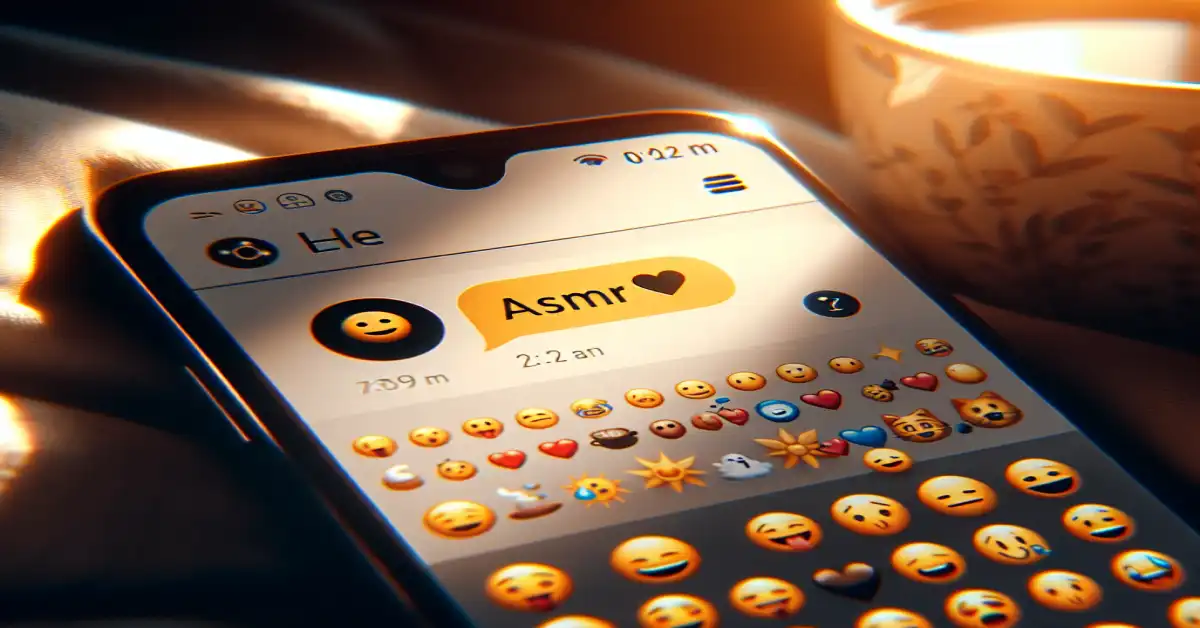
Your friend texts, “Watching ASMR vids before bed, so relaxing lol.” You pause, staring at “ASMR.” Did you miss a trend?
Ever seen “ASMR” pop up in a text and wondered what it actually means? Not sure if you should use it or just ignore it?
This guide breaks down what ASMR means in text, how to use it, and what it says about your chat style.
💬 Guide on what does asmr mean in text
🛠 Step-by-Step Instructions
ASMR stands for “Autonomous Sensory Meridian Response.” In texting and online, this slang meaning is simple: it’s used to talk about videos, sounds, or moments that cause a soothing, tingly chill. Think gentle whispers, tapping, or soft brushing.
People first started using ASMR on YouTube, describing videos that gave them “tingles.” Now, it’s part of internet slang and texting slang, especially among younger people. ASMR has become shorthand for anything that gives relaxing sensations.
If someone says, “This song is total ASMR,” they mean it gives them tingly, chill vibes. It’s a feeling word, not just a technical term. Curious about the science? Here’s a detailed explanation: ASMR on Wikipedia.
🛠 Meaning Explained Simply
ASMR means “something gives you a relaxing tingle or soothing vibe.” It’s used for describing soft sounds, relaxing videos, or even experiences that calm or chill you out.
It started as a technical term but now it’s just chill slang. Merriam-Webster even added it to their dictionary!
🛠 How People Use It in Conversations
Someone might say, “I watch ASMR before bed,” or “That sound is ASMR for my brain.” It works as both a noun (“I love ASMR!”) and a descriptor (“Her voice is ASMR”).
Example: Sam texted this after listening to rain sounds: “That was pure ASMR. I feel so relaxed now!”
Want to see real people talk about this? Check out this lively thread on Reddit’s ASMR community.
🛠 Tone, Emotion & Context
The tone of ASMR is always relaxed, chill, and positive. People use it when talking about things that create comfort, calmness, or pleasant tingles. It’s not meant to be serious or formal.
Use it with friends, on social media, or in casual chats. If you use it at work or with someone formal, it may seem odd unless you’re specifically talking about the ASMR genre.
To learn more about how ASMR evolved into internet slang, check out this slang guide.
🛠 Where You’ll See This Slang Online
You’ll find ASMR all over social media: YouTube, TikTok, Instagram, Reddit, and group chats. There are entire YouTube channels dedicated to ASMR, with millions of subscribers.
On TikTok, creators use “ASMR” in captions or hashtags for videos with soft sounds. Here’s a quick TikTok example: satisfying ASMR sounds.
Social chats about sleep, relaxation, or “oddly satisfying” things often include ASMR. More insights on how it spread? See this deep dive.
🛠 Real Chat Examples
Here are some ways you might see “ASMR” appear in real conversations:
Text: “Your voice is legit ASMR. I could listen all day.”
Text: “Rain on the window = instant ASMR vibes 😴”
Group chat: “Anyone got ASMR podcast recs for tonight?”
For a fun YouTube example, listen to the soothing sounds in this ASMR video.
🕹️ Slang Insights & Best Practices
ASMR is very casual and friendly slang. People use it with friends, in group chats, or on social media. It’s not usually for formal messages or professional emails.
If you use ASMR to describe a sound or feeling, make sure your friend knows what it means. Some people still think of it as a “weird internet thing.”
Meanings can shift fast online. While ASMR started as a technical term, it’s now a feeling, a genre, and a meme. Check out this quick video explainer.
Don’t use ASMR in a formal setting, like job chats, unless you’re talking about the trend itself. It may come off as unprofessional.
ASMR often carries a playful tone. It’s about describing relaxation or comfort. If the mood is serious or tense, it might sound odd.
To avoid awkward mistakes, read the vibe of the group. If everyone uses internet slang and chat slang, it’s safe. Unsure? Try asking, “Do you watch ASMR?” before dropping it in conversation.
If you want to learn where ASMR fits in today’s internet slang, here’s a great read: ASMR’s digital evolution.
🔍 Common Scenarios and Usage
This slang appears in many situations. Here are common examples:
Late-night texting about sleep: You mention “ASMR” when sharing chill YouTube videos that help you relax or fall asleep.
Complimenting voices or sounds: Friends say your new voice note is “total ASMR”—it means you sound soothing or calming.
Sharing oddly satisfying content: You send TikToks of tapping, brushing, or soft sounds and label them “ASMR!” Want to see some? Try this TikTok example.
Talking about relaxation routines: In chats about self-care, you mention, “Taking a bath with ASMR in the background.” The word signals comfort and chill-out vibes. For a deeper look, read this slang guide.
📝 Lessons & Takeaways
“ASMR” is relaxed, playful slang. It describes soothing sounds, vibes, or content. Know your audience—the word is for chill chats, not formal messages.
Understanding internet slang like ASMR helps you feel confident in group chats and social media. For more, check out this dictionary entry.
Conclusion
“ASMR” in text means more than a science term—it’s a chill way to talk about relaxing, tingly experiences or sounds.
Now you know what it means, when to use it, and how to spot it across texts and social media.
Lucas covers internet slang, chat abbreviations, and digital communication trends. At Alamcer, he breaks slang down into straightforward meanings with simple examples so readers always know what people really mean.
Frequently Asked Questions
ASMR stands for Autonomous Sensory Meridian Response. In text, it usually refers to content or sensations that trigger a relaxing or tingling feeling, often associated with soft sounds or gentle visuals.
The rise of video platforms and social media has made ASMR more accessible, especially as people seek ways to relax or reduce stress. Its popularity reflects a growing cultural interest in mindfulness and self-care through digital experiences.
Yes, but context matters. If you're talking about calming content or sensations, it's fine to refer to it as ASMR. Just be sure the person you're communicating with understands the term, since it's still niche for some audiences.
Knowing what ASMR means can give you insight into how people use digital tools to relax or manage anxiety. It helps you connect with others through shared experiences or by recommending content that fits their needs.
Take a moment to understand the context and purpose behind it. Whether it's meant to soothe or entertain, reflecting on why it's being shared can help you engage more thoughtfully with the person or content involved.