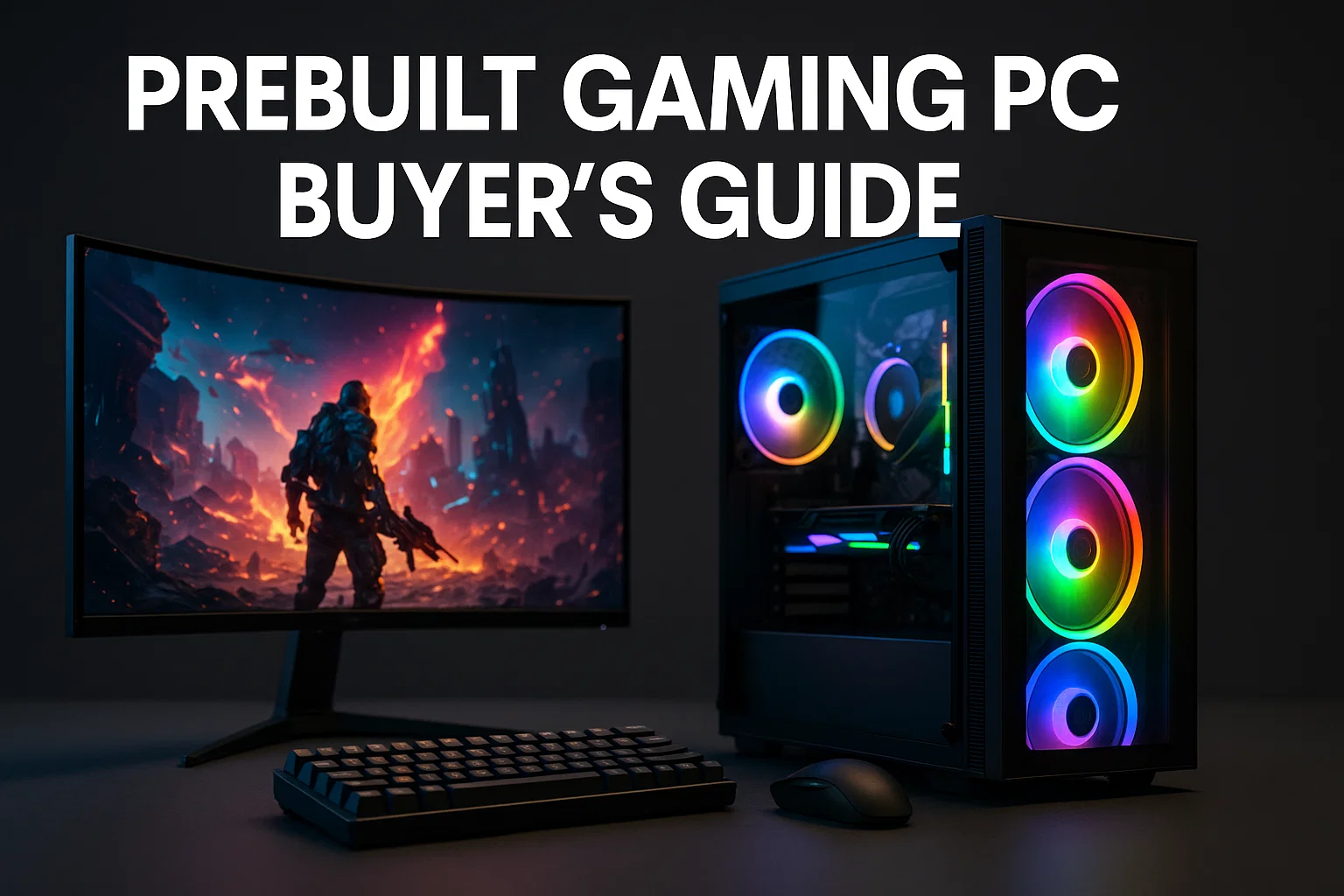
If you want a reliable, ready-to-play setup, a prebuilt gaming pc saves time and gives tested compatibility; this guide helps you compare CPUs, GPUs, memory, and upgrade paths so you buy the right rig with confidence.
Introduction
Prebuilt gaming pc shoppers want clear answers, not guesswork. This article is informational and transactional — you’ll learn what a prebuilt rig actually includes, how to compare models, and how to choose one that fits your performance needs and budget. I’ll walk you through core components, real-world buying steps, and practical tips for upgrades and troubleshooting. Early on we’ll reference manufacturers and benchmark tools so you can validate claims and avoid costly mistakes.
What is a prebuilt gaming pc and why it matters
A prebuilt gaming pc is a ready-made desktop sold by manufacturers or system integrators, assembled and tested before sale. Unlike custom builds, prebuilt systems come with warranty coverage and a turnkey experience: you plug in, install drivers, and game. That convenience matters when you want predictable compatibility, support, and a faster path to play.
Core components explained
- CPU (processor): Determines general application and gaming performance. For gaming, single-core speed and IPC matter.
- GPU (graphics card): The main driver for frame rates, resolution performance, and graphical fidelity.
- Memory (RAM): Affects multitasking and game load stability; 16GB is common baseline.
- Storage: NVMe SSDs drastically improve load times versus older HDDs.
- Motherboard & PSU: Impact future upgrades and system stability.
- Cooling & case: Affect thermal headroom and noise levels.
Why choose prebuilt over custom
- Support & warranty: Single point of contact for hardware issues.
- Compatibility testing: Integrators test cooling, BIOS tuning, and stability.
- Time-savings: No part sourcing, assembly, or driver reconciliation.
- Value packs: Sometimes integrators offer bundled peripherals or software.
Background note: Benchmarks and review sites are important to validate manufacturer claims (see Google guidelines and independent testing references). In my experience, the sweet spot is when a vendor balances a solid GPU, a good PSU, and an NVMe drive.
Paraphrase of authoritative guidance: Independent testing and reproducible benchmarks are the best way to verify claimed performance. (Moz)
Paraphrase of authoritative guidance: Clear specs and transparent warranty policies make it easier to compare prebuilt systems effectively. (Google)
How to pick a prebuilt gaming pc — step-by-step buying guide
Follow these steps to compare and buy with confidence.
- Define your playstyle and must-have settings
- Decide resolution and target FPS: 1080p 60–144 FPS, 1440p 60–120 FPS, or 4K 60 FPS. This defines the GPU class you need.
- Set a firm budget range
- Budgets clarify CPU vs GPU trade-offs. Allocate most to GPU for high-FPS gaming.
- Compare published specs, not marketing words
- Match GPU model, VRAM, CPU model, RAM amount and speed, storage type, and PSU wattage/efficiency.
- Check third-party reviews and benchmarks
- Search for model reviews on reputable sites and look at real-game benchmarks for the GPU/CPU combo.
- Confirm upgrade path
- Check if case size, motherboard socket, and PSU headroom allow future GPU or storage upgrades.
- Warranty & support terms
- Read warranty duration, onsite service options, and what parts are covered.
- Buy from a reputable seller
- Prefer authorized dealers or direct manufacturer stores to simplify RMA.
Quick comparison checklist (copyable)
[ ] GPU model and VRAM:
[ ] CPU model and core count:
[ ] RAM: amount and speed:
[ ] Storage: NVMe/SSD size:
[ ] PSU: wattage and efficiency rating:
[ ] Case size and upgrade room:
[ ] Warranty length and coverage:
Technical snippet — estimate GPU requirement (Node.js)
// node: simple FPS requirement calculator
// Input target resolution and fps to recommend GPU class
function recommendGPU(resolution, targetFps) {
  // Minimal heuristic mapping
  if (resolution === '1080p' && targetFps <= 60) return 'Entry to mid-range GPU (e.g., GTX 1650 to RTX 3050)';
  if (resolution === '1080p' && targetFps <= 144) return 'Mid-range GPU (e.g., RTX 3060 / RX 6600 XT)';
  if (resolution === '1440p') return 'High mid-range to high-end GPU (e.g., RTX 3070+ / RX 6750+)' ;
  if (resolution === '4K') return 'High-end GPU (e.g., RTX 4080 / RX 7900) for 60 FPS';
  return 'Balanced mid-range GPU';
}
// Example usage
console.log(recommendGPU('1080p', 120));
This small tool helps align expectations to GPU class.
Best practices, tools, and recommendations
Follow these best practices to get the best value and fewer headaches.
- Buy the GPU-first build: Prioritize GPU then match CPU and cooling.
- Prefer NVMe boot drive: Faster load times, better system responsiveness.
- Check PSU quality: Avoid cheap unbranded PSUs, pick 80 Plus Bronze or better.
- Reserve a small upgrade budget: A new GPU or SSD later extends lifespan.
Recommended tools / resources
- UserBenchmark / GPU benchmarking pages
- Pros: Quick comparisons, simple charts. Cons: Not always representative of real-world gaming. Install/start tip: Open the site and search your GPU model.
- Manufacturer spec pages (OEM docs)
- Pros: Official specs and warranty info. Cons: Marketing language can hide limits. Tip: Check the support/warranty section for RMA details.
- Independent review sites (eg. SEMrush-like hardware review aggregators)
- Pros: In-depth tests and thermal/noise info. Cons: Multiple sources to read. Tip: Use benchmark summaries and frame-rate charts.
Pros and cons of prebuilt systems
- Pros: Quick to setup, tested, warranty bundled, often bundled software.
- Cons: Less part-level control, markup vs DIY, some integrators use lower-quality PSUs.
Challenges, compliance, and troubleshooting
Common challenges
- Misleading marketing specs: Vague phrases like “gaming-ready” are not enough.
- Bottlenecks: Weak CPU or insufficient RAM can hold back your GPU.
- Noise and thermals: Small cases can throttle GPUs under load.
Troubleshooting quick steps
- Confirm BIOS/driver updates from vendor site.
- Run a stress test and monitor temps, then adjust fan curves.
- If performance is low, check for background processes and storage bottlenecks.
Compliance checklist
- Confirm warranty terms, return window, and RMA process.
- Verify the seller is an authorized distributor.
- Read privacy and payment policies before purchase.
Legal & ethical considerations
Be cautious of used prebuilt systems sold without clear refurbishment disclosures. If buying refurbished, request a full parts list and clear warranty.
Compliance / Disclaimer: This guide provides general information and is not a substitute for professional advice. Check local consumer laws and a qualified technician for complex repairs or business purchases.
Conclusion + CTA
Choosing a prebuilt gaming pc is about matching performance to your real needs, and avoiding common traps like weak PSUs or undersized storage. Use benchmarks, check warranty terms, and plan for a modest upgrade path. Bold takeaways: prioritize GPU, choose NVMe storage, and confirm PSU quality.
Welcome to Alamcer, a tech-focused platform created to share practical knowledge, free resources, and bot templates. Our goal is to make technology simple, accessible, and useful for everyone. We provide free knowledge articles and guides, ready-to-use bot templates for automation and productivity, and deliver insights to help developers, freelancers, and businesses. Contact Alamcer for custom development services for bots and websites on request.
FAQs
What is prebuilt gaming pc?
A prebuilt gaming pc is a ready-made desktop computer assembled by a manufacturer or system builder that comes with tested hardware, warranty coverage, and support, so you can set it up and play without sourcing parts.
How much should I budget for a good prebuilt gaming pc?
Budget depends on target resolution and FPS. Aim to spend most on the GPU; set a range before shopping. Typical entry-to-mid rigs cost less than top-tier rigs, but prioritize GPU and PSU.
Is a prebuilt better than building my own gaming PC?
Prebuilt systems offer convenience, warranty, and tested compatibility, while DIY builds give component-level control and possibly better value. Choose prebuilt if you want support and speed to play.
Can I upgrade parts in a prebuilt gaming pc?
Most prebuilts allow upgrades like storage, RAM, and sometimes GPUs. Check case size, motherboard socket, and PSU wattage before buying.
How do I check if a vendor uses a quality PSU?
Look for PSU brand names, 80 Plus ratings, and wattage headroom. Avoid anonymous or low-efficiency PSUs.
Do prebuilt systems include operating systems and drivers?
Yes, they usually include an OS and vendor drivers. Always update drivers to the latest versions after setup for best performance.
Will a prebuilt gaming pc be noisy?
Noise depends on case design, fans, and GPU cooler. Read independent reviews for noise and thermal measurements before buying.
How long will a prebuilt gaming pc last before needing an upgrade?
With sensible choices, expect 3–5 years of good gaming performance before significant upgrades are needed, depending on desired FPS and new game requirements.
Can I return a prebuilt gaming pc if it underperforms?
Check the seller’s return policy and warranty. Many vendors offer a short return window for buyer remorse and longer warranty for hardware failures.
Where can I find reliable benchmarks for prebuilt systems?
Look for independent benchmarks on trusted review sites and check manufacturer claims against real-game frame-rate tests (see Google guidelines and SEMrush resources for more on testing methodology).
External resources
- Google guidelines (search quality and testing) — for validating benchmarks.
- Moz (SEO and buyer intent insights) — for comparing review content and trust signals.
- SEMrush (review aggregator and testing advice) — for deeper market and comparative analysis.
One-sentence professional suggestion: For large purchases or business deployments, consult a qualified technician or procurement specialist to validate warranties and service level agreements.